

Ep. 55 - The Extremophile's Guide to Art and Space with J.J. Hastings

In this installment of the Future Grind podcast host Ryan O’Shea is joined by Dr. J.J. Hastings. J.J. is a biohacker, artist, and researcher consistently blurring the line between art and science. She is a graduate of NYU, Harvard, Oxford, and London’s Saint Martins with advanced degrees in Biology, Fine Art, and Bioinformatics. She’s been a biohacker for over a decade, and her artwork has been exhibited around the world. In recent years J.J. has turned much of her attention to analog space missions, through which she conducts social, psychological, and scientific experiments that will pave the way for human missions to Mars and beyond.
They discuss her Manifesto of Transfiguration, the relationship between art and science, hackers in space, and much more.
You’ll notice that this episode has two variations of the name - the audio version is titled “The Extremophile's Guide…” while the video version is titled “The Extremophiles’ Guide…”. It was debated whether or not the name should mean “the guide of an extremophile” (“Extremophile’s”), or “a guide for all extremophiles” (“Extremophiles’”). That answer we settled on was “both.”
And we have a special announcement - we plan to send an episode of the Future Grind podcast to the Moon on board Astrobotic’s first mission, and we wanted to provide you an opportunity to fly alongside us by sending your own digital files and photos to Moon! Find out more and get involved here - To The Moon
Note: Some of the links in this post are affiliate links. This means that your purchases can help financially support this podcast!
J.J.’s “Manifesto of Transfiguration” (2014)
Nature, and by extension the human body, is mediocre and deserving of scorn. It is not the product of supernatural design, but rather probability, and therefore merits no intrinsic reverence or devotion.
The schism between ‘natural’ and ‘synthetic’ is artifice. Whether made by the hands of humankind or other beings/forces, all matter is formed of the same fragmentary constituents of our Cosmos.
As a species, humans have developed an impulse to find meaning out of seeming disorder, and from this impulse is born our search for purpose and the transcendental. Such an impulse can be destructive as much as it is powerful, yet it must be cultivated in the search for our own apotheosis.
It is only through the advancement of techne that apotheosis can be attained. For, what is technology but an attempt to ameliorate insufficiency?
The quest for apotheosis merits abhorrence for the ordinary and an aversion to convention. Rather, our deliverance lies in the singular, the aberration, the improbable. Uniformity breeds mundanity, the perdition from which we seek salvation.
Transcendence must be sought in every aspect of our existence—the material, the spiritual, the cerebral, and the emotional—and that which is revered as sacred, sublime and worthy of devotion must abjure a sense of familiarity. Ours is an aesthetic devoted to the exceptional, the irrational, the preposterous.
We're posting in two forms, an audio podcast and a video podcast. Please subscribe to our YouTube channel, and Apple Podcasts feed as we have some exclusive content that is not posted on both channels. You can also find us on Facebook.
View and share on social media.
Listen to this podcast on Apple Podcasts (subscribe, download, review)
Download as an MP3 by right-clicking here and choosing “download as"
Watch this episode on YouTube (subscribe, like, comment)
Show Notes
J.J.’s extremophile life [2:14]
Biohacking [4:21]
Academia, illness, & finding biohacking [5:37]
Manifesto of Transfiguration [9:58]
Artwork using ML & parts of J.J.’s body [17:20]
Science vs. Art [24:52]
Stelarc & the power of framing [27:57]
Obsolescence & reincarnation of the body [31:04]
Transhumanism [33:41]
J.J.’s implants [34:58]
Science labs and making the creative space [36:18]
J.J.’s academic credentials [38:10]
Analog space missions [40:23]
Cornell fellowship, COVID, and future space missions [46:07]
How to follow along [47:08]
Mentioned
Ernest Shackleton
Bioinformatics
Valentine de Saint-Point’s “Manifesto of Futurist Woman”
Demiurge (Universal Fashioner) / Demiurge (art)
Ambystomatid salamanders
Stelarc, Ear on Arm
Objectivity by Lorraine Daston & Peter Galison
Bennu (Egyptian deity), Bennu (Asteroid), Bennu (art)
Max More & Natasha Vita-More
xNT NFC Chip implant
PegLeg, Michael Laufer
London Biohackspace
BioQuisitive (Melbourne, Australia)
Michel Foucault, Heterotopia
DEF CON
Lunares
Dr. Sarah Jane Pell
Sensoria, HI-SEAS
Roscosmos, MARS-500
Please like, comment, rate, and share this podcast to spread the word. Ryan O'Shea is on Instagram, Twitter, and Facebook, and we'd love to hear what you thought and what you want to see going forward.
If you have any questions or are interested in supporting or advertising with Future Grind, you can reach us at hello@futuregrind.org.

Ep. 54 - David Ernst on Liquid Democracy

In this installment of the Future Grind podcast host Ryan O’Shea discusses the concept of liquid democracy, or democracy 3.0, with David Ernst. David is an entrepreneur and technologist advocating for and working to build the infrastructure to support liquid democracy, which is a combination of direct and representative democracy in which voters can choose to directly vote on legislation, or can delegate their vote on any issue to someone who they feel is more capable or qualified to make those decisions. David’s current major project is Secure Internet Voting, or SIV, which promises to offer fast, private, and verifiable internet voting. He also runs Democracy Space and hosts the Liquid Future podcast, which explores Democracy 3.0 and other visions for the future of government and society.
They discuss how liquid democracy can be implemented today with no changes to law, the value of specialization and it’s role in decision making, the failures of partisanship, the possibility of AI making political decisions, and much more. You can find David on Twitter at @dsernst.
And we have a special announcement - we plan to send an episode of the Future Grind podcast to the Moon on board Astrobotic’s first mission, and we wanted to provide you an opportunity to fly alongside us by sending your own digital files and photos to Moon! Find out more and get involved here - To The Moon
We're posting in two forms, an audio podcast and a video podcast. Please subscribe to our YouTube channel, and iTunes feed as we have some exclusive content that is not posted on both channels. You can also find us on Facebook.
View and share on social media.
Listen to this podcast on iTunes (subscribe, download, review)
Download as an MP3 by right-clicking here and choosing “download as"
Watch this episode on YouTube (subscribe, like, comment)
Show Notes
Hybrid of Direct and Representative Democracy [2:32]
The Proxy Delegation Process [7:25]
The Major Problem of Partisan Politics [11:37]
Implementing Democracy 3.0 Today [16:54]
David’s Background [19:55]
The History of Liquid Democracy, Democracy 3.0 [25:30]
Securing Reliable Online Voting [30:04]
Risk of Populism and Mob Rule [38:44]
Privacy Vs. Transparency in Democracy 3.0 [52:56]
Delegating votes to organizations, causes, or even AIs [57:11]
Gerrymandering & Replacing the Current System [1:02:14]
How to Get Involved and Support [1:09:22]
Mentioned
Athenian democracy
The DAO (Ethereum)
Jordan Hall, “We can restore Democracy by disrupting politics. Here’s how.”
Partido de la Red (Net Party, Argentina)
Santiago Siri, Democracy Earth
Pirate Party
Copyleft
Brian Ford, “Delegative Democracy”
Lewis Carroll’s The Principles of Parliamentary Representation
Declaration of the Rights of Man and of the Citizen
James Madison, Federalist 58
Dunbar’s number
Low-information rationality / Low-information voter
Sierra Club
National Rifle Association
Futarchy
Ranked voting
STAR voting
Please like, comment, rate, and share this podcast to spread the word. Ryan O'Shea is on Instagram, Twitter, and Facebook, and we'd love to hear what you thought and what you want to see going forward.
If you have any questions or are interested in supporting or advertising with Future Grind, you can reach us at hello@futuregrind.org.
Ep. 53 - Autonomy and Data Liberation with Hugo Campos

In this installment of the Future Grind podcast host Ryan O’Shea sits down with well known data liberation advocate Hugo Campos. Hugo lives with an Implantable Cardioverter Defibrillator, or ICD, which monitors his heart and helps keep him alive. However, the lack of transparency coming from the medical community about his device and the data it collects has lead Hugo on decade plus mission to advocate for data liberation and patient engagement. Hugo has been honored as a White House Champion of Change for Precision Medicine by President Barack Obama, and works with Stanford Medicine X, which is Stanford's premier program on emerging technology and medicine, focusing on patient-centered innovation. Hugo has also shared his story in a TEDx talk at Harvard in 2011.
Today Hugo is a participant ambassador for the All of Us Research Program, an initiative from the NIH focused on building a diverse health database featuring over 1 million participants which will drive future scientific and medical breakthroughs.
They discuss the value of data, inherent issues in the medical industry, the importance of autonomy, opportunities presented by the All of Us program and much more.
And we have a special announcement - we plan to send an episode of the Future Grind podcast to the Moon on board Astrobotic’s first mission, and we wanted to provide you an opportunity to fly alongside us by sending your own digital files and photos to Moon! Find out more and get involved here - To The Moon
We're posting in two forms, an audio podcast and a video podcast. Please subscribe to our YouTube channel, and iTunes feed as we have some exclusive content that is not posted on both channels. You can also find us on Facebook.
View and share on social media.
Listen to this podcast on Apple Podcasts (subscribe, download, review)
Download as an MP3 by right-clicking here and choosing “download as"
Watch this episode on YouTube (subscribe, like, comment)
Show Notes
The Start of Hugo’s Journey [3:17]
Hugo’s Life Before The Journey [8:34]
How ICD Data Interrogation Works [10:46]
Hugo’s Quest for Patient Autonomy [14:26]
How Hugo Gets His Data [17:13]
Hugo’s Goal of Autonomy and Information [20:57]
Health Experiments in Quantified Self [24:40]
Can People Be Trusted with Their Data [29:45]
Roadblocks to Change [34:37]
Financial Aspects of Remote Monitoring [35:51]
Apple, Google, & Healthcare Data of the Future [37:49]
The All of Us Research Program [41:30]
Altruism, Self-Interest, & Value in the All of Us Program [45:35]
Mentioned
Medical Terms -
Hypertrophic Cardiomyopathy
Vasovagal syncope
Mitral Valve Prolapse
Atrial Fibrillation
Tachycardia
AliveCor Kardia
Please like, comment, rate, and share this podcast to spread the word. Ryan O'Shea is on Instagram, Twitter, and Facebook, and we'd love to hear what you thought and what you want to see going forward.
If you have any questions or are interested in supporting or advertising with Future Grind, you can reach us at hello@futuregrind.org.
Ep. 52 - AI Ethics and Social Reform with Nell Watson

In this installment of the Future Grind podcast host Ryan O’Shea speaks with Nell Watson, an entrepreneur and machine intelligence researcher whose work primarily focuses on protecting human rights and creating ethical AI. She currently serves as AI Faculty at Singularity University and works with the IEEE on AI initiatives. She also chairs EthicsNet.org, which crowdsources datasets to teach pro-social behaviors to machines, and CulturalPeace.org, which seeks to craft Geneva Conventions-style rules for cultural conflict. Nell serves as Senior Scientific Advisor to The Future Society at Harvard, and holds Fellowships from the British Computing Society, and Royal Statistical Society, among others.
They discuss AI value alignment, the role for humans in AI, rules of engagement for the culture wars, the COVID-19 pandemic, and much more.
Both Nell and Ryan are going to be speaking at the Humanity Plus Post-Pandemic summit on July 7th and 8th, 2020. This free digital event will be themed around A Future Free of Disease and Destruction, and they’ll be joined by some of the leading figures in futurism and transhumanism including Dr. Ben Goertzel, Dr. Max More, Dr. Natasha Vita-More, Dr. Anders Sandberg, and more. You can register here.
And we have a special announcement - we plan to send an episode of the Future Grind podcast to the Moon on board Astrobotic’s first mission, and we wanted to provide you an opportunity to fly alongside us by sending your own digital files and photos to Moon! Find out more and get involved here - To The Moon
Note: Some of the links in this post are affiliate links. This means that your purchases can help financially support this podcast!
We're posting in two forms, an audio podcast and a video podcast. Please subscribe to our YouTube channel, and iTunes feed as we have some exclusive content that is not posted on both channels. You can also find us on Facebook.
View and share on social media.
Listen to this podcast on iTunes (subscribe, download, review)
Download as an MP3 by right-clicking here and choosing “download as"
Watch this episode on YouTube (subscribe, like, comment)
Show Notes
Nell’s interest in ML & ethics [3:13]
QuantaCorp & Nell’s ML background [4:15]
The shift from tech development to ethics [7:37]
EthicsNet.org Oversight & Moderation [12:28]
Human In The Loop Limits on AI [14:05]
Hackability & Bias in Humans & AI [17:05]
Ethics of Disparate AI Impact [20:52]
Existential Risk & AGI [22:44]
Risk of Information Gerrymandering & Shadow banning [27:03]
CulturalPeace.org Rules for Culture Wars [30:24]
Nell’s Work on Contact Tracing Ethics [36:07]
The COVID-19 Pandemic [39:36]
Blockchain & Trusted Institutions [40:25]
Nell’s Humanity Plus talk on Genetic Privilege [42:28]
Nell’s Reading Recommendations [43:45]
Mentioned
QuantaCorp
Nell Watson TEDx talk, "Gaslighting AI & Cyber Poltergeists”
Study, “Extraneous factors in judicial decisions”
Facebook Radioactive Data Tracking
Paperclip Maximizer
OpenAI’s GTP-3
AI Control Problem
Informational Gerrymandering
Subreddit Simulator
Geneva Conventions
Sen. Orrin Hatch essay “Geneva Conventions for the Culture War”
Exponential View by Azeem Azhar
Nick Bostrom’s Superintelligence: Paths, Dangers, Strategies
Wendel Wallach & Colin Allens’s Moral Machines: Teaching Robots Right from Wrong
Please like, comment, rate, and share this podcast to spread the word. Ryan O'Shea is on Instagram, Twitter, and Facebook, and we'd love to hear what you thought and what you want to see going forward.
If you have any questions or are interested in supporting or advertising with Future Grind, you can reach us at hello@futuregrind.org.
Ep. 51 - Micah Redding on Christian Transhumanism

In this installment of the Future Grind podcast host Ryan O’Shea speaks with Micah Redding, the founder and Executive Director of the Christian Transhumanist Association and the host of the Christian Transhumanist Podcast. He grew up as a preacher's kid, spent eight years as a rock musician, and now works as a software developer. He’s also a member of Mensa, a frequent contributor to the Huffington Post and Vice Motherboard, and a public speaker.
They discuss what it means to be a Christian transhumanist, Micah's thoughts on mind uploading, AI, cyborgs, and death, his vision of the future, and much more.
And we have a special announcement - we plan to send an episode of the Future Grind podcast to the Moon on board Astrobotic’s first mission, and we wanted to provide you an opportunity to fly alongside us by sending your own digital files and photos to Moon! Find out more and get involved here - To The Moon
Note: Some of the links in this post are affiliate links. This means that your purchases can help financially support this podcast!
We're posting in two forms, an audio podcast and a video podcast. Please subscribe to our YouTube channel, and iTunes feed as we have some exclusive content that is not posted on both channels. You can also find us on Facebook.
View and share on social media.
Listen to this podcast on iTunes (subscribe, download, review)
Download as an MP3 by right-clicking here and choosing “download as"
Watch this episode on YouTube (subscribe, like, comment)
Show Notes
The Christian Transhumanist Association [2:35]
How Micah defines transhumanism [5:04]
What it means to be a Christian transhumanist [5:51]
Micah’s path to transhumanism [8:19]
Is transhumanism a religion? [9:38]
Relationship with the Mormon Transhumanist Association [10:55]
Are Christians already transhumanists [12:12]
A history of Christian transhumanism [13:57]
Response to Apocalypse Accelerationists & escapism [16:36]
The Christian Transhumanist Oxymoron [18:48]
Transhumanist thought in the Bible [21:14]
The Tower of Babel and projects to avoid [23:36]
The solar system & beyond [26:02]
Self, Identity, Souls, & AI in a technological future [27:44]
Is the CTA the work of Satan? Is Micah a demon? [32:22]
Thoughts on a transhumanist schism [34:15]
A Christian in the transhumanist community [35:43]
The Mark of the Beast [37:08]
View of aesthetic and gender augmentations [39:13]
Is body modification & augmentation religious expression? [41:00]
Micah’s vision for the future [41:53]
Death [44:35]
Recommended reading [47:42]
Where to follow along with Micah & the CTA [50:02]
Mentioned
Mormon Transhumanist Association
Patristics
Francis Bacon, The Great Instauration, New Atlantis
Pierre Teilhard de Chardin, The Phenomenon of Man
Julian Huxley
Russell Moore
From the Bible
- Genesis 1
- Noah’s Ark
- Tower of Babel
C. S. Lewis
N. T. Wright, Surprised by Hope
Humanity+
U.S. Transhumanist Party
Jacob Boss
Frank Tipler, The Physics of Immortality
Please like, comment, rate, and share this podcast to spread the word. Ryan O'Shea is on Instagram, Twitter, and Facebook, and we'd love to hear what you thought and what you want to see going forward.
If you have any questions or are interested in supporting or advertising with Future Grind, you can reach us at hello@futuregrind.org.
Ep. 50 - Future Ready Organizations with Singularity University's Nick Davis

In this installment of the Future Grind podcast host Ryan O’Shea speaks with Nick Davis, the Faculty Chair for Corporate Innovation at Singularity University. Nick helps organizations identify and capitalize on the exponential trends that will impact their industry, and the world. He’s just authored a new book titled Future Ready: A Changemaker's Guide to the Exponential Revolution, which is described as a “resource for developing skillsets for future success”. Nick is also a Venture Partner at BOLD Capital, which invests in high-growth startups that leverage exponential technologies, and serves as the Chief Platform Officer for the Mid-Ohio Foodbank.
They discuss what it means to be future ready, the importance of mindset, the impact of the coronavirus pandemic, and much more.
And we have a special announcement - we plan to send an episode of the Future Grind podcast to the Moon on board Astrobotic’s first mission, and we wanted to provide you an opportunity to fly alongside us by sending your own digital files and photos to Moon! Find out more and get involved here - To The Moon
Note: Some of the links in this post are affiliate links. This means that your purchases can help financially support this podcast!
We're posting in two forms, an audio podcast and a video podcast. Please subscribe to our YouTube channel, and iTunes feed as we have some exclusive content that is not posted on both channels. You can also find us on Facebook.
View and share on social media.
Listen to this podcast on iTunes (subscribe, download, review)
Download as an MP3 by right-clicking here and choosing “download as"
Watch this episode on YouTube (subscribe, like, comment)
Show Notes
Focus on Making Future Ready Leaders [2:42]
Nick’s background & path to innovation [3:48]
SU’s Corporate Innovation Offerings [6:08]
Singularity University Case Studies [8:19]
The Purpose of the Future Ready Book [14:06]
The Importance of Mindset [15:49]
Kodak and Being the Disruptor [18:25]
Implementing Change [20:48]
Importance of Combinatorial Innovation [24:12]
Businesses for Social Good [27:18]
Startup Partnerships [29:40]
Impact of the COVID-19 Pandemic [32:13]
Future of Remote & Distributed Work [34:18]
Regulation & Working with Regulators [37:38]
Following Passions to Build the Future [40:53]
Mentioned
Reaching The Future Faster
PricewaterhouseCoopers, Mitra Best
Adam Hoffman of Singularity University on Future Grind
https://www.midohiofoodbank.org/
Microsoft HoloLens
Elon Musk
Kodak digital photography history
Please like, comment, rate, and share this podcast to spread the word. Ryan O'Shea is on Instagram, Twitter, and Facebook, and we'd love to hear what you thought and what you want to see going forward.
If you have any questions or are interested in supporting or advertising with Future Grind, you can reach us at hello@futuregrind.org.
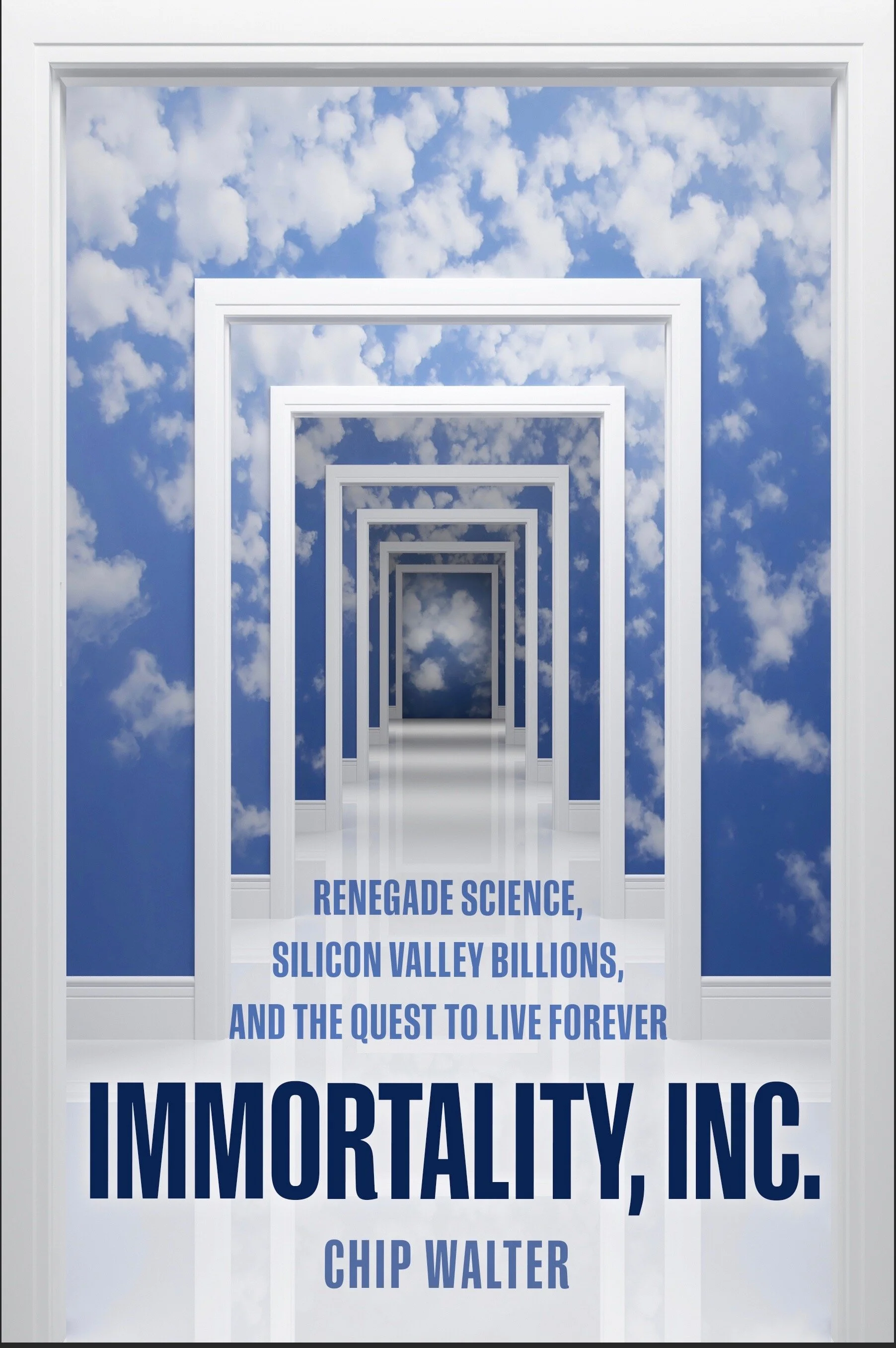
Ep. 49 - The Business of Life Extension with Chip Walter

In this installment of the Future Grind podcast host Ryan O’Shea speaks with Chip Walter, author of the new book Immortality, Inc.: Renegade Science, Silicon Valley Billions, and the Quest to Live Forever. While writing this book, Chip was granted exclusive access to some of the major players in longevity science, and it provides a dive into the lives, motivations, and work and some names you’ll certainly recognize. In addition to being an author, Chip is a journalist, filmmaker, and former CNN bureau chief. He has published articles for publications such as National Geographic, The Economist, the Wall Street Journal, and Scientific American, and he has written four earlier books on topics such as Star Trek, the space age, and evolution, and they discuss those as well.
And we have a special announcement - we plan to send an episode of the Future Grind podcast to the Moon on board Astrobotic’s first mission, and we wanted to provide you an opportunity to fly alongside us by sending your own digital files and photos to Moon! Find out more and get involved here - To The Moon
Note: Some of the links in this post are affiliate links. This means that your purchases can help financially support this podcast!
We're posting in two forms, an audio podcast and a video podcast. Please subscribe to our YouTube channel, and iTunes feed as we have some exclusive content that is not posted on both channels. You can also find us on Facebook.
View and share on social media.
Listen to this podcast on iTunes (subscribe, download, review)
Download as an MP3 by right-clicking here and choosing “download as"
Watch this episode on YouTube (subscribe, like, comment)
Show Notes
Why write about life extension? [2:47]
Plan B - cryonics & reanimation [5:47]
The major players [7:53]
The approach to the book [10:20]
Inside Calico & their approach [12:13]
The Baby Boomer Influence [19:11]
The Science [23:12]
Meaning of “Immortality” and “Inc.” [25:37]
Concerns about extending lifespan [31:22]
Aging as a disease, & access [35:03]
Writing research & methodology [37:41]
Chip’s strategy for extending health & life [39:10]
Star Trek technologies [41:47]
Evolution & directed evolution [44:57]
Docuseries & future book [47:45]
Get the books & follow along [50:12]
Mentioned
Ralph Merkle
Alcor Life Extension Foundation
Epic of Gilgamesh
The cast:
Larry Page of Google
Ray Kurzweil of Google & Singularity University
Peter Diamandis of XPRIZE
Art Levinson of Apple & Genentech
Aubrey de Grey of SENS Research Foundation
Craig Venter of the J. Craig Venter Institute
Robert Hariri of Human Longevity, Inc.
Bill Maris of Google Ventures
The Right Stuff by Tom Wolfe
Calico
Long lived animals -
Naked Mole Rat
Orange Roughy
Bowhead Whales
Blue Zones
I’m Working on That: A Trek From Science Fiction to Science Fact with William Shatner
Facebook’s Oculus
Last Ape Standing: The Seven-Million-Year Story of How and Why We Survived
Thumbs, Toes, and Tears: And Other Traits That Make Us Human
Please like, comment, rate, and share this podcast to spread the word. Ryan O'Shea is on Instagram, Twitter, and Facebook, and we'd love to hear what you thought and what you want to see going forward.
If you have any questions or are interested in supporting or advertising with Future Grind, you can reach us at hello@futuregrind.org.
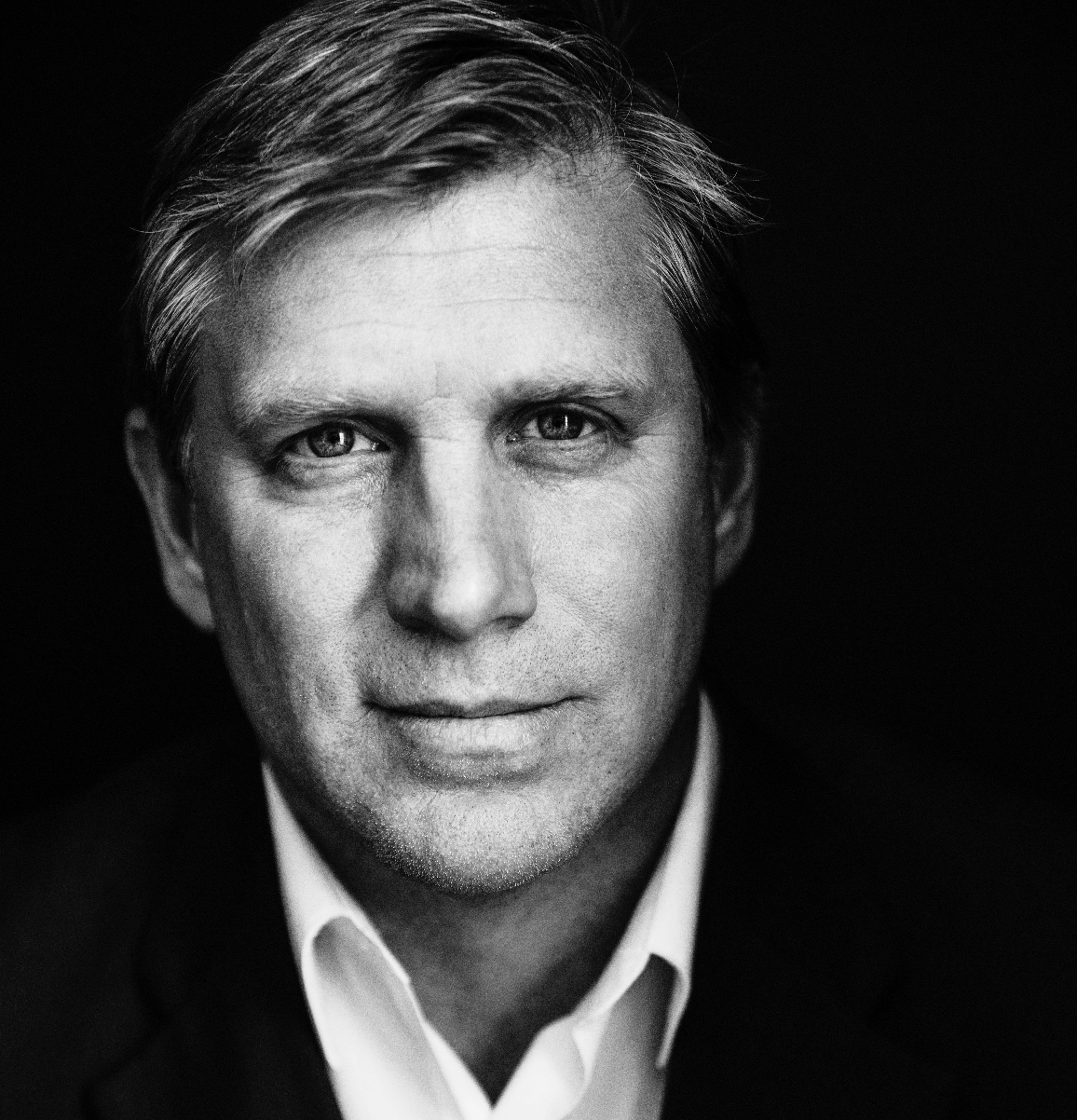
Ep. 48 - UBI and Upgrading America with Zoltan Istvan

In this installment of the Future Grind podcast host Ryan O’Shea is joined by the first repeat guest on the podcast, Zoltan Istvan, who is running against Donald Trump in the 2020 Republican Primary for President of the United States. The previous Zoltan episode was in 2016, when he was running for the presidency as a third party candidate with the Transhumanist Party. That episode discusses Zoltan’s background, while this one is purely focused on 2020 and his current campaign. Beyond his runs for office, Zoltan is a transhumanist speaker and author, and has written articles for the New York Times, Newsweek, Vice, Wired, TechCrunch, and more. You may have also caught him on the Joe Rogan Experience and The Rubin Report with Dave Rubin.
They discuss universal basic income, party politics, China, and much more.
And we have a special announcement - we plan to send an episode of the Future Grind podcast to the Moon on board Astrobotic’s first mission, and we wanted to provide you an opportunity to fly alongside us by sending your own digital files and photos to Moon! Find out more and get involved here - To The Moon
We're posting in two forms, an audio podcast and a video podcast. Please subscribe to our YouTube channel, and iTunes feed as we have some exclusive content that is not posted on both channels. You can also find us on Facebook.
View and share on social media.
Listen to this podcast on iTunes (subscribe, download, review)
Download as an MP3 by right-clicking here and choosing “download as"
Watch this episode on YouTube (subscribe, like, comment)
Show Notes
Zoltan’s Political Ideology [3:12]
Challenging Trump [4:09]
Party politics [5:44]
The Politics of Transhumanism [8:52]
Chipping Immigrants and Misrepresentation [10:39]
Licensing Parents [15:17]
Universal Basic Income and Federal Land Dividend [18:54]
The Rise of China [24:19]
Zoltan’s Campaign Funding [27:09]
Zoltan’s Coffin Bus Documentary [28:47]
Find out More and Follow Along [30:53]
Mentioned
Andrew Yang
Overton Window
National Geographic
New Times BPB’s ”Presidential Candidate Suggests We Microchip Syrian Refugees”
Zoltan’s ”It's time to consider restricting human breeding” in WIRED.
Zoltan’s “The New American Dream? Let the Robots Take Our Jobs” in VICE
”A Transhumanist Runs for President” National Review article
Immortality or Bust film
Please like, comment, rate, and share this podcast to spread the word. Ryan O'Shea is on Instagram, Twitter, and Facebook, and we'd love to hear what you thought and what you want to see going forward.
If you have any questions or are interested in supporting or advertising with Future Grind, you can reach us at hello@futuregrind.org.
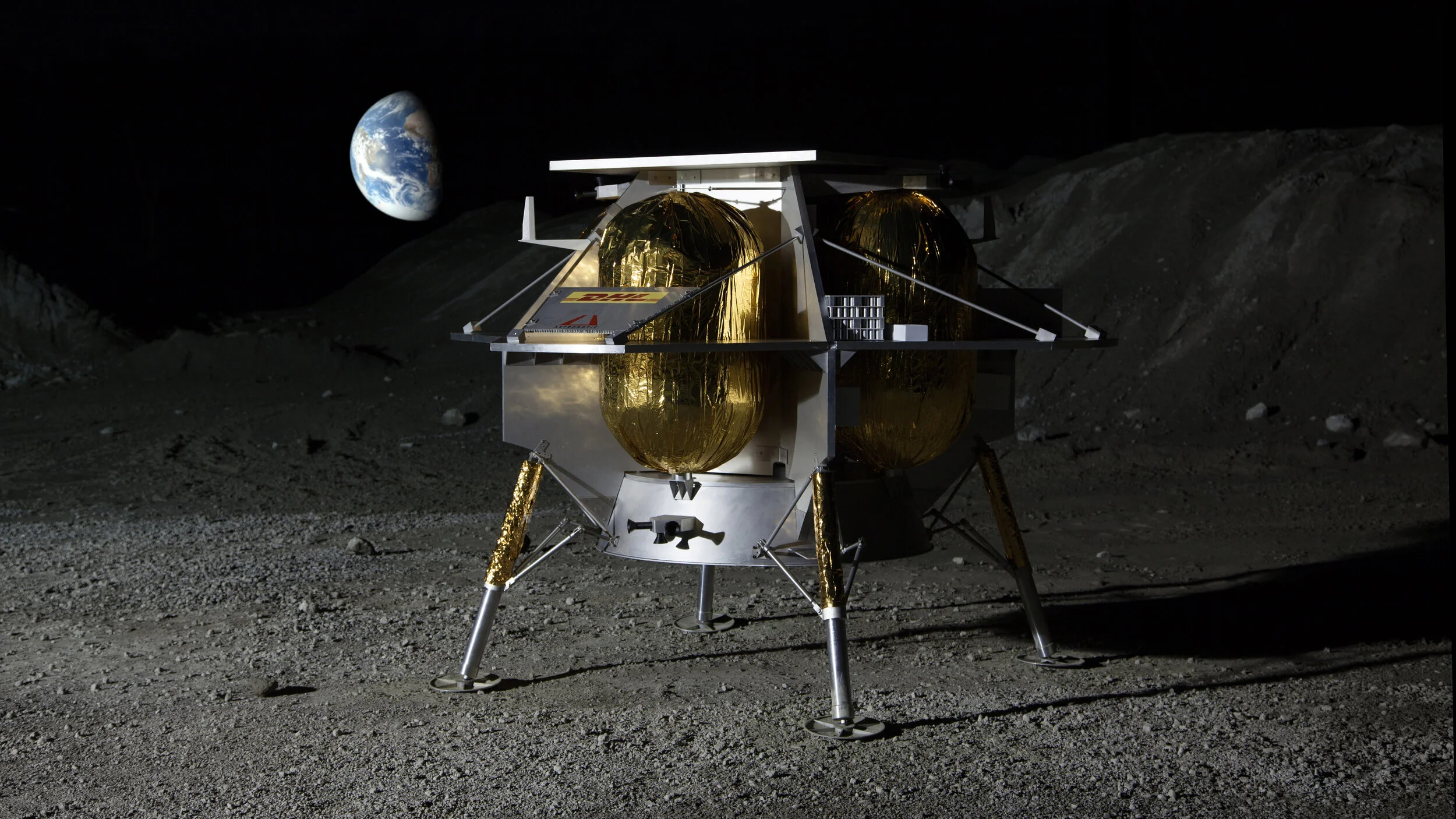
Ep. 47 - Robots in Space with John Thornton of Astrobotic

In this installment of the Future Grind podcast host Ryan O’Shea discusses the future of space robotics with John Thornton, CEO of Astrobotic. Astrobotic is a space robotics company that seeks to make space accessible to the world by using their lunar landers to deliver payloads for companies, governments, universities, and individuals. Originally spun out of Carnegie Mellon University in 2007 by robotics pioneer Red Whittaker, Astrobotic is creating affordable planetary access to spark a new era of exploration, science, tourism, and resource utilization. While they haven’t yet launched their lunar landers, Astrobotic technology is currently aboard the International Space Station.
They discuss Astrobotic’s early success in the Google Lunar XPRIZE, the future of space robotics and human spaceflight, and more.
And we have a special announcement - we plan to send this episode of the Future Grind podcast to the Moon on board Astrobotic’s first mission, and we wanted to provide you an opportunity to fly alongside us by sending your own digital files and photos to Moon! Find out more and get involved here - To The Moon
We're posting in two forms, an audio podcast and a video podcast. Please subscribe to our YouTube channel, and iTunes feed as we have some exclusive content that is not posted on both channels. You can also find us on Facebook.
View and share on social media.
Listen to this podcast on iTunes (subscribe, download, review)
Download as an MP3 by right-clicking here and choosing “download as"
Watch this episode on YouTube (subscribe, like, comment)
Show Notes
What is Astrobotic? [2:48]
Backstory and Beginnings [3:22]
Google Lunar XPRIZE [5:00]
Carnegie Mellon Connection [6:14]
$80 Million in NASA Contracts [6:59]
Private Payloads and MoonBox [8:34]
Countdown to Launch & Vulcan [16:24]
The Griffin Lander and Future Launches [19:24]
New Pittsburgh Headquarters [21:29]
Hiring and Open Positions [25:16]
John’s Path to CEO of Astrobotic [26:41]
Rovers and Deployment [28:30]
Landing Site and Lunar Cave Potentials [30:39]
Earth, Mars, and Beyond [33:54]
Custom vs. Off-The-Shelf Components [35:41]
Humans in Space and Aliens [36:10]
Space Law and Roadblocks [40:19]
Rover-As-A-Service and Rental Robots [44:27]
Astrobotic Technology on the Moon and ISS [46:16]
Space Industry Community [49:02]
What the Future Holds [50:25]
Mentioned
Google Lunar XPRIZE (XPRIZE)
Agencia Espacial Mexicana (Mexican Space Agency)
Pocari Sweat
DHL MoonBox
DHL
Astrobotic Mission One Manifest
ULA Vulcan
NASA Commercial Lunar Payload Services (CLPS)
TeraSwitch
Lacus Mortis (Lake of Death)
Alien Robots theory
International Space Station
Bosch & SoundSee
Please like, comment, rate, and share this podcast to spread the word. Ryan O'Shea is on Instagram, Twitter, and Facebook, and we'd love to hear what you thought and what you want to see going forward.
If you have any questions or are interested in supporting or advertising with Future Grind, you can reach us at hello@futuregrind.org.
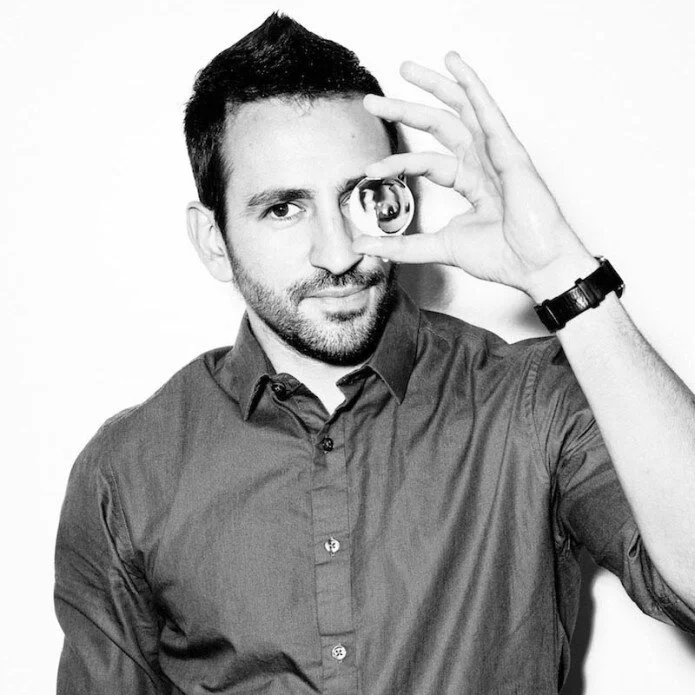
Ep. 46 - Entrepreneurship in the Maker Community with Matt Verlinich

In this installment of the Future Grind podcast host Ryan O’Shea sits down with Matt Verlinich. Matt was the founding General Manager of TechShop Pittsburgh and a founding member of the Protohaven makerspace. He’s also the founder of Clear Ice Rocks, where he invented, prototyped, crowdfunded, and mass-produced a system for creating completely clear ice at home (check it out here). Matt is now a part of the Innovation Works team, where he works with early stage hardware companies to guide them through the design and manufacturing process.
They discuss his insights into the maker movement and where it’s headed, the relationship between the maker community and entrepreneurship, how you can get work to get a product made and marketed, life-logging, and more.
Note: Some of the links in this post are affiliate links. This means that your purchases can help financially support this podcast!
We're posting in two forms, an audio podcast and a video podcast. Please subscribe to our YouTube channel, and iTunes feed as we have some exclusive content that is not posted on both channels. You can also find us on Facebook.
View and share on social media.
Listen to this podcast on iTunes (subscribe, download, review)
Download as an MP3 by right-clicking here and choosing “download as"
Watch this episode on YouTube (subscribe, like, comment)
Show Notes
TechShop [2:37]
TechShop Community - Hobbyists, Artists, Entrepreneurs [5:30]
Expensive Tools & Costs [9:11]
Makerspace Investment Partners [11:00]
Matt’s path to Entrepreneurship [12:45]
Clear Ice Rocks! [16:02]
Case Study: Manufacturing Physical Products[18:14]
Navigating Manufacturers [20:59]
Innovation Works & AlphaLab Gear [23:10]
Innovation Works Portfolio Companies [27:00]
How to Identify Manufacturing Needs [30:03]
When to Manufacture Locally vs. Overseas [31:21]
Hardware Cup & AlphaLab Gear Opportunities [34:17]
What Sets Innovation Works/AlphaLab Apart [35:54]
The (Avoidable?) Collapse of TechShop [37:45]
The Creation of a Non-Profit TechShop - Protohaven [41:30]
Matt’s Photographic Life-Log [44:36]
Relationship Between Photographs & Memory [49:14]
What’s Next for Matt [52:22]
Mentioned
Instructables
Walnut Capital
Bakery Square
UPMC Enterprises
Human Engineering Research Laboratory
Ascender
Nikola Tesla
Westinghouse
Rapid TPC
Ben Franklin Technology Partners
AlphaLab & AlphaLab Gear
ESTAT Actuation
Sparkwear (Aura Sparks)
MAKE: & Maker Faire
Dale Dougherty
Artisan’s Asylum (Boston)
HackPGH
Prototype - Feminist Makerspace
Carnegie Science Center Makerspace
BDYHAX’s Human Augmentation 101
Adobe Lightroom
Google Photos
Study: Point-and-shoot memories: the influence of taking photos on memory for a museum tour
Please like, comment, rate, and share this podcast to spread the word. Ryan O'Shea is on Instagram, Twitter, and Facebook, and we'd love to hear what you thought and what you want to see going forward.
If you have any questions or are interested in supporting or advertising with Future Grind, you can reach us at hello@futuregrind.org.
Ep. 45 - Advanced Robotics and AI in Manufacturing with Suzy Teele

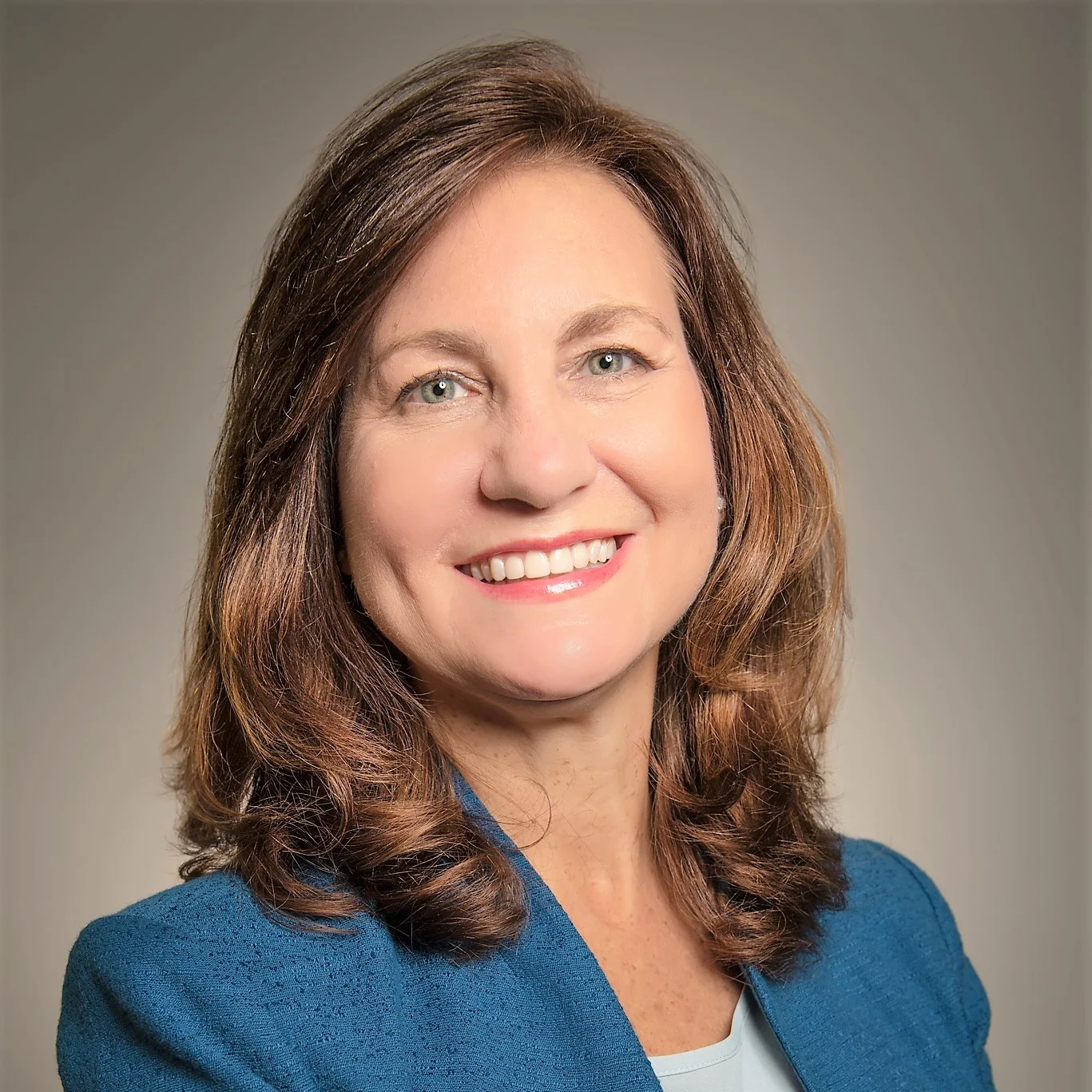
In this installment of the Future Grind podcast host Ryan O’Shea speaks with Suzy Teele, the Head of Marketing and Communications for the Advanced Robotics for Manufacturing Institute, also known as the ARM Institute. The ARM Institute is a Department of Defense-funded non-profit that accelerates the advancement of transformative robotic technologies, artificial intelligence, and education to increase U.S. global manufacturing competitiveness. They spun out of Carnegie Mellon University and are a consortium with more than 200 members including Intel, BMW, Lockheed Martin, Boeing, Yaskawa, and more.
They discuss the future of automation and advanced robotics, the government’s interest in manufacturing, projects in development, and much more.
We're posting in two forms, an audio podcast and a video podcast. Please subscribe to our YouTube channel, and iTunes feed as we have some exclusive content that is not posted on both channels. You can also find us on Facebook.
View and share on social media.
Listen to this podcast on iTunes (subscribe, download, review)
Download as an MP3 by right-clicking here and choosing “download as"
Watch this episode on YouTube (subscribe, like, comment)
Show Notes
The Purpose & Beginnings of ARM [2:35]
The Consortium Members [5:09]
Department of Defense & Other Funding [9:06]
Concerns on Militarization of Advanced Robotics & AI [12:15]
Projects in Development [15:01]
Going from Problems to Solutions (& IP) [20:20]
AI vs Robotics [23:50]
Project Completion [25:21]
Metrics of Success [28:16]
Workforce Development & Education [30:06]
Standardization in Robotics [33:49]
Suzy’s Background in Tech [36:18]
Mill 19 & The Pittsburgh Story [39:49]
Automation Taking Jobs [46:02]
Projects at Mill 19 [50:45]
The Future of ARM [52:15]
Mentioned
Manufacturing USA
Consortium Members
- AccuTrex
- RE2 Robotics
- IAm Robotics
- CapSen Robotics
- Titan Robotics
- ABB
- Yaskawa
- FANUC
Technology readiness levels
Projects
- FISH project
- Teach Bot
- Automated Wire Harness Assembly
Southwest Research Institute (SwRI)
- Robot Operating System (ROS)
Mill 19
Pittsburgh Robotics Network
Uber ATG (now Aurora)
Manufacturing Futures Initiative
Catalyst Connection
Please like, comment, rate, and share this podcast to spread the word. Ryan O'Shea is on Instagram, Twitter, and Facebook, and we'd love to hear what you thought and what you want to see going forward.
If you have any questions or are interested in supporting or advertising with Future Grind, you can reach us at hello@futuregrind.org.

Ep. 44 - Jane Metcalfe on the Neobiological Revolution

In this installment of the Future Grind podcast host Ryan O’Shea speaks with Jane Metcalfe, the serial entrepreneur best known as a co-founder of Wired Magazine, which she first published in 1993. Jane is now the Founder and CEO of NEO.LIFE, a digital media company seeking to do for the neobiological revolution what Wired did for the digital revolution. They accomplish this by exploring topics such as neuroscience, genetic engineering, synthetic biology, the microbiome, longevity, and much more. Jane has also been the president of TCHO, a producer of high end chocolates, and has made investments in numerous tech and media projects.
They discuss the genesis of Wired, including how they were able to assemble an incredible early team consisting of Kevin Kelly, Nicholas Negroponte, John Battelle, and more, the similarities and differences between the digital revolution and current neobiological revolution, NEO.LIFE’s recently announced book, and much more.
Note: Some of the links in this post are affiliate links. This means that your purchases can help financially support this podcast!
We're posting in two forms, an audio podcast and a video podcast. Please subscribe to our YouTube channel, and iTunes feed as we have some exclusive content that is not posted on both channels. You can also find us on Facebook.
View and share on social media.
Listen to this podcast on iTunes (subscribe, download, review)
Download as an MP3 by right-clicking here and choosing “download as"
Watch this episode on YouTube (subscribe, like, comment)
Show Notes
Jane’s background: Electric Word & International Affairs [3:02]
The story or Wired [5:28]
Kevin Kelly & the Dream Team [9:27]
The Early Adopters [15:12]
NEO.LIFE [18:04]
The Neobiological Revolution [23:48]
Neobiological Revolution vs. Digital Revolution [25:44]
Stories NEO.LIFE covers [30:04]
NEO.LIFE book announcement [33:51]
Sensationalism & Clickbait Media [39:00]
Covering the Controversy [47:50]
Live events, Print, & the future of NEO.LIFE [51:08]
The next big thing(s) [52:59]
Thoughts on food, GMOs, & diets [54:47]
What else is Jane up to [1:01:41]
Mentioned
Louis Rosetto
Mac World
MIT Media Lab
Whole Earth Catalog
John Perry Barlow (Grateful Dead)
Timothy Leary
Out of Control: The New Biology of Machines, Social Systems, & the Economic World
Victor Hugo
TED, Richard Saul Werman
Condé Nast
Singularity University
Stewart Brand
Onno Faber
Open Insulin, Counter Culture Labs
Medtronic
Steve Ramirez
George Church
Ed Boyden
Laurene Powell Jobs, The Atlantic
Human Cell Atlas
Chronomics
Michael Pollan
David Eagleman
Human Vaccine Project
Berggruen Institute Future Humans project
Please like, comment, rate, and share this podcast to spread the word. Ryan O'Shea is on Instagram, Twitter, and Facebook, and we'd love to hear what you thought and what you want to see going forward.
If you have any questions or are interested in supporting or advertising with Future Grind, you can reach us at hello@futuregrind.org.

Ep. 43 - David Pearce on Ending Suffering

In this installment of the Future Grind podcast host Ryan O’Shea sits down with David Pearce, the British philosopher best known for his 1995 manifesto The Hedonistic Imperative. Pearce argues that should work towards the abolition of suffering in all sentient life. This sounds great, but when you explore the details of how this might be possible, including genetic modification of humans, population-level gene drive technology, and the elimination of predator species, things can get pretty controversial.
They explore these and other light and fun topics including anti-natalism, existential risk, animal uplift, Nozick’s experience machine, and more.
We're posting in two forms, an audio podcast and a video podcast. Please subscribe to our YouTube channel, and iTunes feed as we have some exclusive content that is not posted on both channels. You can also find us on Facebook.
View and share on social media.
Listen to this podcast on iTunes (subscribe, download, review)
Download as an MP3 by right-clicking here and choosing “download as"
Watch this episode on YouTube (subscribe, like, comment)
Show Notes
David’s early interest in philosophy [1:42]
The Hedonistic Imperative [4:07]
The Abolitionist Project [6:50]
Defining of “bliss” & “suffering” [9:02]
How to accomplish the Abolitionist Project in Humans [14:24]
Predation & Suffering in the Natural World [21:43]
Better to have lived & died (for eating) or not? [23:06]
Negative Utilitarianism [26:49]
Anti-natalism - is procreation a negative? [30:00]
Pearce’s desire to end existence [33:29]
Is Pearce an Existential Risk? [40:47]
Teaming up with Nick Bostrom to launch the WTA [45:21]
Conscious computers & philosophical zombies [48:30]
Nozick’s Experience Machine [52:44]
Torture & David’s Pain Tolerance [55:24]
Consent & Animal Uplift [57:14]
Thoughts on Free Will [59:39]
What’s next for David [1:00:56]
Mentioned
Wireheading
Negative Utlitarianism
SCN9A Pain Gene
Jo Cameron - doesn’t feel pain
Ahimsa in Jainism
Pearce’s Reprogramming Predators
Thomas Hobbes’ Leviathan
Anti-natalism
Vacuum Decay
Ursula Le Guin's "The Ones Who Walk Away from Omelas"
Utilitronium Shockwave
AI Value Alignment Problem
Nick Bostrom, Future of Humanity Institute at Oxford University
Ray Kurzweil
Humanity Plus
David Chalmers, Dualism
Panpsychism
Nozick’s Experience Machine
Please like, comment, rate, and share this podcast to spread the word. Ryan O'Shea is on Instagram, Twitter, and Facebook, and we'd love to hear what you thought and what you want to see going forward.
If you have any questions or are interested in supporting or advertising with Future Grind, you can reach us at hello@futuregrind.org.
Ep. 42 - The Magic of Biohacking with Anastasia Synn

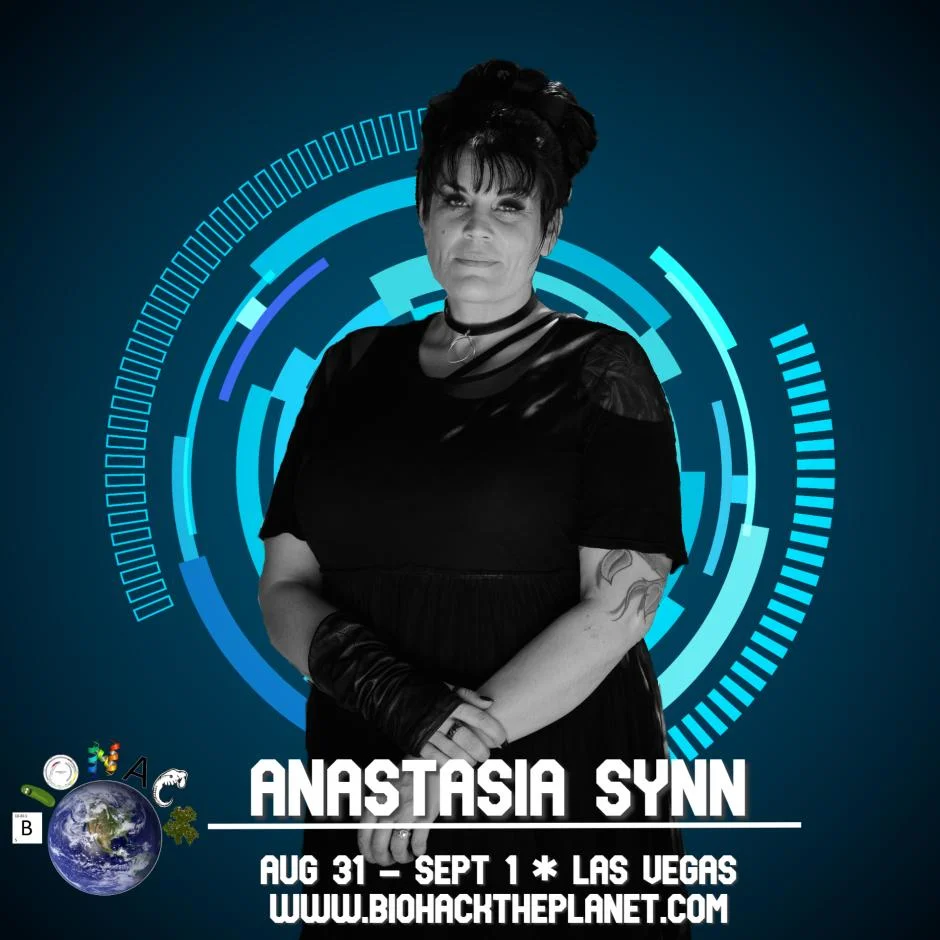
In this installment of the Future Grind podcast host Ryan O’Shea speaks with Anastasia Synn, a Las Vegas-based magician that uses her over two dozen implants both in her live performances and in her daily life. Anastasia is a pioneer in the biohacking and transhumanist communities, using her network and creativity to think up incredible new uses for implanted technology. Anastasia has been prominently featured in national and international media, and she has testified in support of augmentative technology in front of the Nevada State Legislature. She also stars in a new Hulu documentary profiling her husband, famed comedian and magician The Amazing Johnathan.
They discuss Anastasia’s use of implants, her path to the biohacking community, her vision for the future, and more.
We're posting in two forms, an audio podcast and a video podcast. Please subscribe to our YouTube channel, and iTunes feed as we have some exclusive content that is not posted on both channels. You can also find us on Facebook.
View and share on social media.
Listen to this podcast on iTunes (subscribe, download, review)
Download as an MP3 by right-clicking here and choosing “download as"
Watch this episode on YouTube (subscribe, like, comment)
Show Notes
Anastasia’s path to magic and biohacking [1:50]
Why Anastasia was drawn to implants [3:56]
Using implants for magic [7:00]
Pioneering the use of implants [10:18]
Anastasia’s 26 implants, and more coming [11:51]
Staying safe with implants [12:55]
Pushing boundaries and sharing information [14:30]
Reaction in the magic community [16:23]
Using implants in daily life [18:12]
Coming NFC/Wifi/Bluetooth implant [20:06]
Experiments with wearables [22:34]
Thoughts on replacing biology entirely [26:12]
Nootropics [26:53]
Life extension and transhumanism [28:00]
Advocating for augmentative tech with policymakers [30:22]
The biohacking community [34:56]
Biohack the Planet [36:00]
The Amazing Jonathan Documentary [37:34]
Elon Musk, Neuralink, and the future [39:17]
Mentioned
Criss Angel, Mindfreak
Dangerous Things
Grindhouse Wetware, Bottlenose
Johnny Mnemonic, William Gibson
Tim Cannon
James Randi’s Educational Foundation
Alan Rorrison
Samppa Von Cyborg
Grindfest
Penguin Magic
Johnny Thompson
Cooper (Dangerous Minds)
Cassox (Augmentation Limitless)
Spire wearable
ORII
Dave Asprey, Bulletproof Coffee
US Transhumanist Party
Assembly Bill 226 (Review-Journal article, Anastasia’s testimony)
AYO glasses
DEF CON
Biohack the Planet
Josiah Zayner, The ODIN
The Amazing Jonathan Documentary
Elon Musk, Neuralink
Please like, comment, rate, and share this podcast to spread the word. Ryan O'Shea is on Instagram, Twitter, and Facebook, and we'd love to hear what you thought and what you want to see going forward.
If you have any questions or are interested in supporting or advertising with Future Grind, you can reach us at hello@futuregrind.org.
Ep. 41 - DIY Gene Engineering with Josiah Zayner

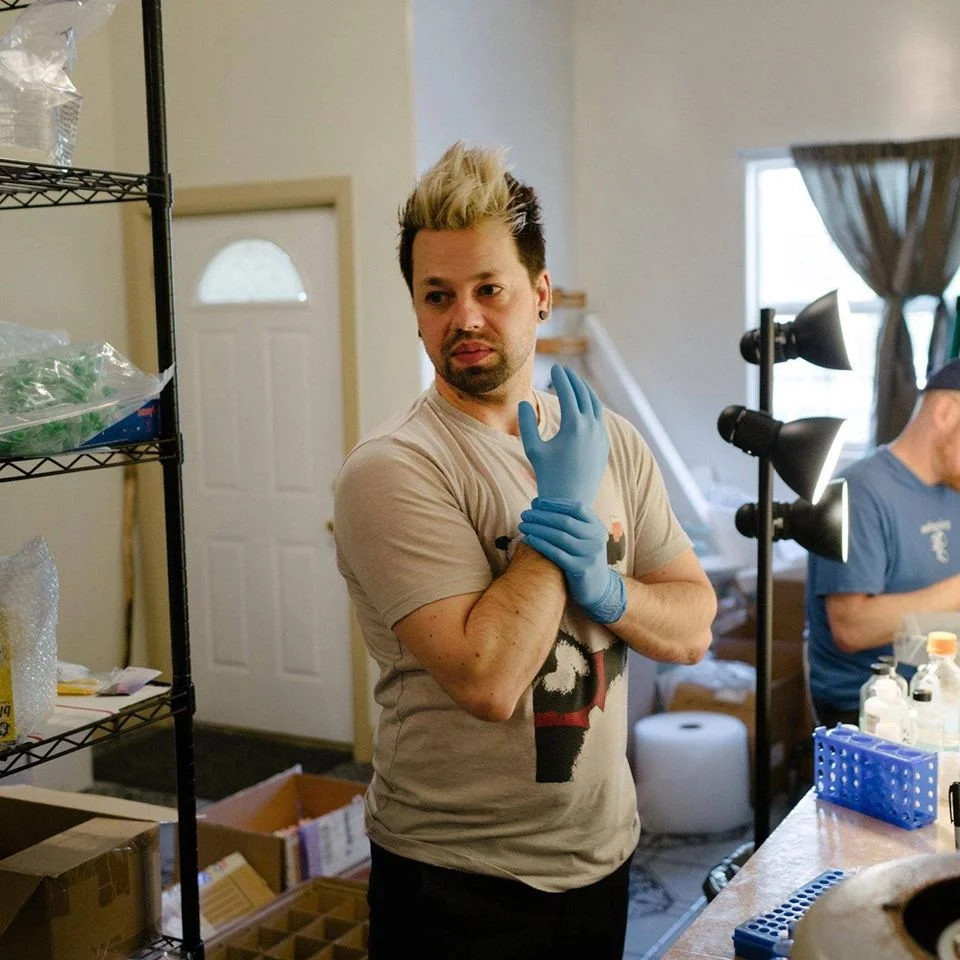
In this installment of the Future Grind podcast host Ryan O’Shea speaks with Dr. Josiah Zayner, the former NASA scientist who in 2017 became the first known human to attempt to modify themselves using CRISPR gene editing technology. Josiah's controversial company, The ODIN, provides educational courses and sells DIY gene editing kits for everything from bacteria to frogs, and soon plans to offer kits for the DIY modification of human cells.
They discuss his experiments in human augmentation, bodily autonomy, the healthcare industry, and so much more.
In addition to his work with The ODIN, Josiah hosts the Biohack The Planet conference. Past speakers include Dr. Aubrey de Grey of the SENS Research Foundation, Hamilton Morris of the VICE series Hamilton’s Pharmacopeia, magician and biohacker Anastasia Synn, and many more.
We're posting in two forms, an audio podcast and a video podcast. Please subscribe to our YouTube channel, and iTunes feed as we have some exclusive content that is not posted on both channels. You can also find us on Facebook.
View and share on social media.
Listen to this podcast on iTunes (subscribe, download, review)
Download as an MP3 by right-clicking here and choosing “download as"
Watch this episode on YouTube (subscribe, like, comment)
Show Notes
Credentials & media portrayal [2:23]
Josiah’s education & path to NASA [6:06]
Why Josiah left NASA [9:27]
The ODIN [11:02]
Explaining the name “The ODIN” [12:40]
ODIN customer projects [13:43]
Josiah’s microbiome transplant & CRISPR experiment [14:36]
Reasons & results (or lack thereof) [17:00]
Allegations of practicing medicine [25:05]
Barriers to exercising bodily autonomy [32:48]
Biohack the Planet [40:56]
Talk to look forward to [44:34]
What’s next for The ODIN [48:58]
Mentioned
Rich Lee
Gut Hack video
The Atlantic article
Other genetic modifications
- Tristan Roberts’ experimental HIV treatment
- Aaron Traywick’s experimental herpes treatment
- Justin Atkin’s experimental lactose Intolerance treatment
California investigation & Josiah’s interview video
Women on Waves
Former Biohack the Planet speakers -
- Amal Graafstra
- Zoltan Istvan
- Alex Pearlman
Some 2019 speakers
- Jessica Polka of ASAPbio
- David Hewlett, Stargate
- Zach Weissmueller, Reason
- Dr. Rob Carlson, Bioeconomy Capital
- Michael Solana, Founders Fund (Peter Thiel)
- Misti Norris, Petra & the Beast
Please like, comment, rate, and share this podcast to spread the word. Ryan O'Shea is on Instagram, Twitter, and Facebook, and we'd love to hear what you thought and what you want to see going forward.
If you have any questions or are interested in supporting or advertising with Future Grind, you can reach us at hello@futuregrind.org.

Ep. 40 - Creating Exponential Tech Communities with Singularity University

In this installment of the Future Grind podcast host Ryan O’Shea sits down with Adam Hofmann, the Vice President of Marketing for Singularity University. Singularity University describes itself as a global learning and innovation community using exponential technologies to tackle the world’s biggest challenges and build a better future for all. It was founded in 2008 by Peter Diamandis and Ray Kurzweil, and currently offerers online and in-person educational programs for individuals, incubator programs for startups, and leadership and innovation trainings for organizations. SU also focuses on media - they put out content through SingularityHub, and just recently announced their acquisition of Futurism, a digital media company that with capabilities in both distribution and production.
They discuss SU’s goal of using exponential technology to conquer the world’s biggest challenges, their focus on online communities, a future of abundance, and much more.
Note: Some of the links in this post are affiliate links. This means that your purchases can help financially support this podcast!
We're posting in two forms, an audio podcast and a video podcast. Please subscribe to our YouTube channel, and iTunes feed as we have some exclusive content that is not posted on both channels. You can also find us on Facebook.
View and share on social media.
Listen to this podcast on iTunes (subscribe, download, review)
Download as an MP3 by right-clicking here and choosing “download as"
Watch this episode on YouTube (subscribe, like, comment)
Show Notes
Singularity University’s Mission [2:48]
Exponential Technologies [4:07]
SU’s Programs [6:25]
The Creation of SU [8:57]
Singularity University’s “Customers” [11:52]
SU is not a “university” [13:26]
Adam’s path to SU [14:15]
SU Success Stories [16:25]
From Nonprofit to B-Corp [20:22]
SU’s high costs & discount opportunities [22:21]
Admission into SU programs [25:23]
SU’s amazing faculty & staff [27:07]
The online community [30:49]
SU local chapters [36:09]
SU partners & supporters [37:52]
How to get started with SU [40:22]
The Futurism acquisition [42:15]
SU podcast & what’s next [45:20]
Mentioned
Deep Blocks
Be My Eyes
Abundance Digital
Abundance: The Future is Better than You Think; Steven Kotler
Kaufmann Foundation
Getaround
Made in Space
Matternet
Dr. Daniel Kraft
Ramez Naam (also science fiction writer)
Andre Wegner
Aaron Frank
Futurism (acquisition press release)
Alex Klokus
Uncommon Partners
Please like, comment, rate, and share this podcast to spread the word. Ryan O'Shea is on Instagram, Twitter, and Facebook, and we'd love to hear what you thought and what you want to see going forward.
If you have any questions or are interested in supporting or advertising with Future Grind, you can reach us at hello@futuregrind.org.

Ep. 39 - XPRIZE and Collaborative Innovation with Amir Banifatemi

In this installment of the Future Grind podcast, host Ryan O’Shea is joined by Amir Banifatemi, the General Manager of Innovation and Growth at XPRIZE. XPRIZE is a nonprofit organization that offers cash prizes to encourage teams to create technology capable of solving humanity’s grand challenges and bring us closer to a better, safer, more sustainable world. In this role Amir is directly involved with prizes including the $5 Million IBM Watson AI XPRIZE and the $10 Million ANA Avatar XPRIZE.
In addition to his work with XPRIZE, Amir is a co-founder and curator of the AI for GOOD Global Summit, which he helps to lead in association with the United Nations. Amir is also a co-founder of AI Commons, a nonprofit organization that seeks to make using and benefiting from AI available to all.
They discuss what XPRIZE is and how to get involved, strategies to enable anyone to participate in solving the world’s most pressing issues, and much more!
We're posting in two forms, an audio podcast and a video podcast. Please subscribe to our YouTube channel, and iTunes feed as we have some exclusive content that is not posted on both channels. You can also find us on Facebook.
View and share on social media.
Listen to this podcast on iTunes (subscribe, download, review)
Download as an MP3 by right-clicking here and choosing “download as"
Watch this episode on YouTube (subscribe, like, comment)
Show Notes
Amir’s focus on innovation & growth [1:58]
Amir’s background in startups and VC [2:53]
Work with the European Space Agency [4:50]
The goal of XPRIZE [5:53]
The ANA Avatar XPRIZE [8:09]
Contrasting Avatar XPRIZE & DARPA Robotics Challenge [12:06]
Collaboration & Combinatorial Innovation [15:28]
How to get involved with the Avatar XPRIZE [18:30]
Success and impact beyond the prizes [22:22]
XPRIZE Pittsburgh and cities partnerships [25:30]
The AI for Good Global Summit [29:10]
The United Nations and Sustainable Development Goals [35:20]
AI Commons [37:56]
What’s next? [41:30]
Mentioned
Ansari XPRIZE
DARPA Robotics Challenge
Virgin Galactic, Richard Branson
Astrobotic
RoboTutor
Hera Global Tech
TrashBot (CleanRobotics)
Behaivior
City AI
International Telecommunications Union (ITU)
AI for Health Focus Group, World Health Organization
Elon Musk
Please like, comment, rate, and share this podcast to spread the word. Ryan O'Shea is on Instagram, Twitter, and Facebook, and we'd love to hear what you thought and what you want to see going forward.
If you have any questions or are interested in supporting or advertising with Future Grind, you can reach us at hello@futuregrind.org.
Ep. 38 - The Future of Hiring with Anessa Fike

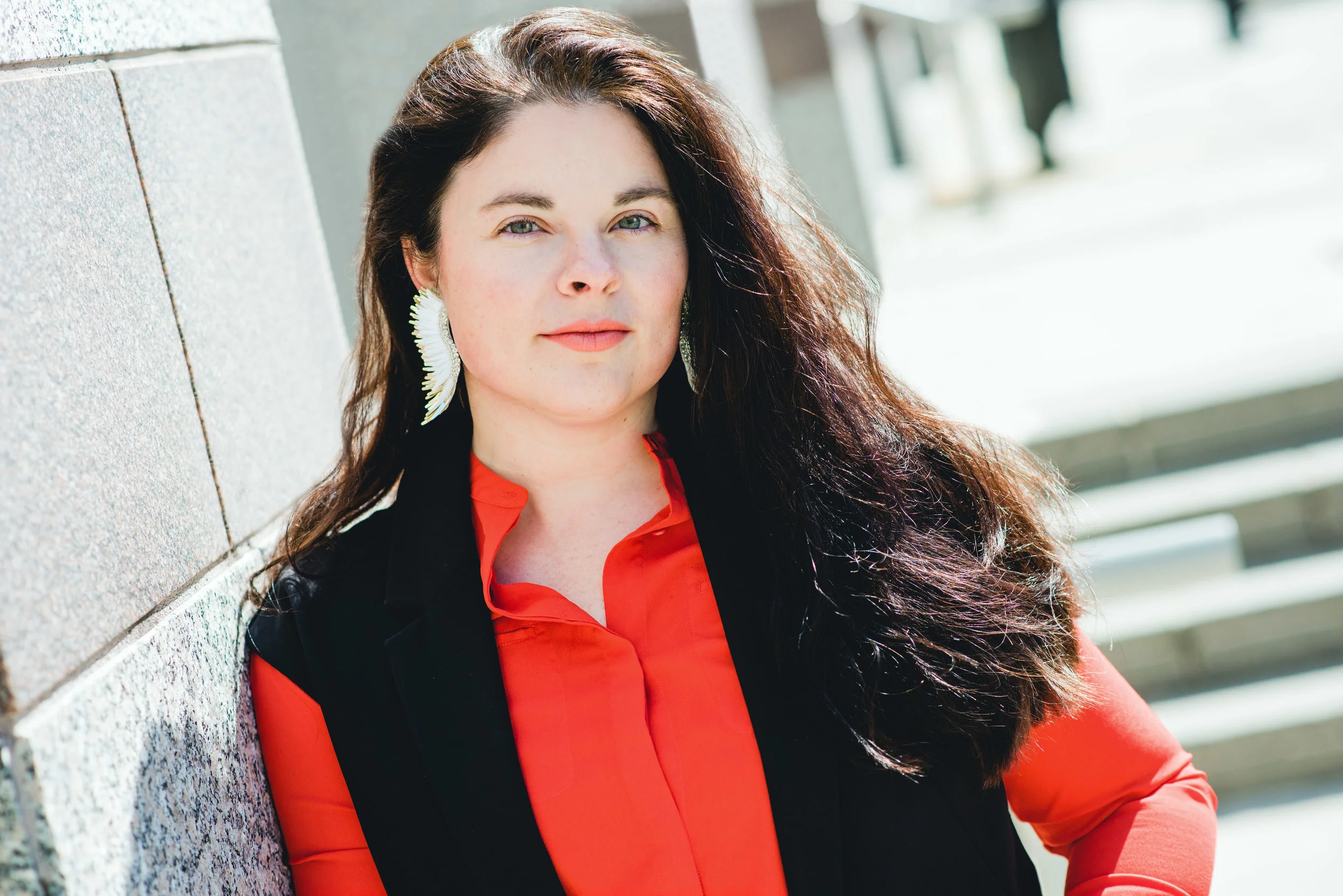
In this installment of the Future Grind podcast, host Ryan O’Shea sits down with Anessa Fike, the CEO & Founder of Fike + Co. Fike + Co. has been doing talent and people operations differently for the last decade. They are not your typical consulting firm, and they are not a staffing firm or agency. They help businesses at all stages of development - whether they are just starting out or need help scaling or growing into the next stage. Fike + Co. is focused on connecting people and culture. Anessa is here to discuss the future of hiring - the changing workforce, AI assisted hiring, future-proof skillsets, controversies, and so much more. While many episodes of Future Grind are discussing a future that is years off, this episode will have an impact today. So if you are starting or changing careers, are in school, are looking to expand, or know of people in those positions, this episode has actionable advice that can be put into practice immediately.
This episode is sponsored by Fike + Co., but that’s not the reason Anessa is here. As you’ll see, Anessa is an expert in this field, and I’m excited for you to have the opportunity to learn from her.
There are a ton of entrepreneurs and business leaders listening to this, and I’m confident that Anessa and her team can help your organization grow. They know how important it is to understand your unique workplace culture, and to find candidates that fit seamlessly into existing organizations. If you’re looking to grow, or just want to bounce around ideas and explore possibilities, please visit them at fikeandco.com.
This episode was recorded on location at the Pittsburgh Technology Council.
We're posting in two forms, an audio podcast and a video podcast. Please subscribe to our YouTube channel, and iTunes feed as we have some exclusive content that is not posted on both channels. You can also find us on Facebook.
View and share on social media.
Listen to this podcast on iTunes (subscribe, download, review)
Download as an MP3 by right-clicking here and choosing “download as"
Watch this episode on YouTube (subscribe, like, comment)
Show Notes
What is Fike + Co? [2:51]
Anessa’s Story [5:31]
AI & Automation Replacing Humans [10:45]
Future-Proof Skills [13:14]
Contractors, Gig Economy, & Remote Work [15:29]
The Changing Workforce [18:36]
The Importance of Corporate Social Responsibility [21:47]
The Controversy Around Targeted Ads [23:22]
Discrimination, Laws, & Compliance [26:58]
Social Media - To Check or Not To Check [28:29]
Culture [32:35]
Getting a Job Without a Degree [36:26]
Fike + Co. in the Future [38:42]
Utilizing Recruiters as a Job Seeker [41:41]
New Podcast Coming Soon [42:58]
Advice for Companies Looking to Expand [44:29]
Mentioned
The Motley Fool
Amazon’s biased hiring AI
Corporate Social Responsibility
Controversy Around Targeted Employment Ads
Please like, comment, rate, and share this podcast to spread the word. Ryan O'Shea is on Instagram, Twitter, and Facebook, and we'd love to hear what you thought and what you want to see going forward.
If you have any questions or are interested in supporting or advertising with Future Grind, you can reach us at hello@futuregrind.org.
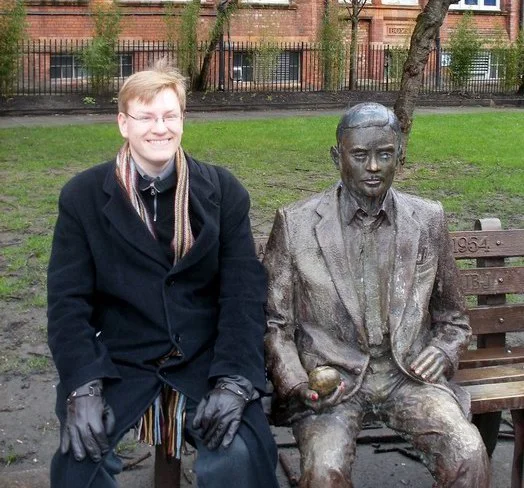
Ep. 37 - AI, Aliens, and Existential Risk with Anders Sandberg

In this installment of the Future Grind podcast, host Ryan O’Shea speaks with Dr. Anders Sandberg. Anders is currently a research fellow with the Future of Humanity Institute at the University of Oxford. His research focuses on global catastrophic risk, cognitive enhancement, collective intelligence, neuroethics, public policy, and much more. Anders serves as an advisor to Humanity Plus, and has a background in computer science, neuroscience and medical engineering. He obtained his Ph.D. in computational neuroscience, which focused on neural network modeling of human memory, from Stockholm University in Sweden, which is the country he is originally from.
In this wide ranging conversation discuss existential risks, the possibility of alien life, the vulnerable world hypothesis, and much more. Say hello to Anders on Twitter at @anderssandberg.
Note: Some of the links in this post are affiliate links. This means that your purchases can help financially support this podcast!
We're posting in two forms, an audio podcast and a video podcast. Please subscribe to our YouTube channel, and iTunes feed as we have some exclusive content that is not posted on both channels. You can also find us on Facebook.
View and share on social media.
Listen to this podcast on iTunes (subscribe, download, review)
Download as an MP3 by right-clicking here and choosing “download as"
Watch this episode on YouTube (subscribe, like, comment)
Show Notes
From science fiction to reality [1:53]
Future of Humanity Institute [3:17]
Catastrophic & Existential Risk [6:37]
When is risk “Catastrophic”? [10:30]
AI Risk [12:27]
Climate Change & Systemic Risk [16:01]
Human engineering to combat climate change [20:51]
Biotech Risk - Intent vs. Accident [23:54]
Thoughts on democratization of science [28:04]
Surveillance & the Vulnerable World Hypothesis [30:21]
The Fermi Paradox - Are we alone in the universe? [37:23]
What is transhumanism, and is Anders a transhumanist? [44:11]
Individual vs. Societal wellbeing [47:46]
Anders’ strategies for enhancement & wellbeing [50:50]
Controlled trials of public policy [56:43]
The media Anders’ consumes [1:00:37]
Anders’ new book [1:02:52]
Optimism [1:05:20]
Mentioned
Dr. James Martin, Oxford Martin School
Nick Bostrom
Precautionary principle
Amlin partnership
Joanna Bryson
Karin Kuhlemann, Sexy vs Unsexy catastrophic risks
Human engineering and climate change
Bill McKibben
Bostrom’s Vulnerable World Hypothesis
David Brin, The Transparent Society
Robin Hanson’s Great Filter
23andMe
Metformin
Rapamycin
Bruce Schneier
The Economist
Charlie Stross
Greg Egan
Please like, comment, rate, and share this podcast to spread the word. Ryan O'Shea is on Instagram, Twitter, and Facebook, and we'd love to hear what you thought and what you want to see going forward.
If you have any questions or are interested in supporting or advertising with Future Grind, you can reach us at hello@futuregrind.org.
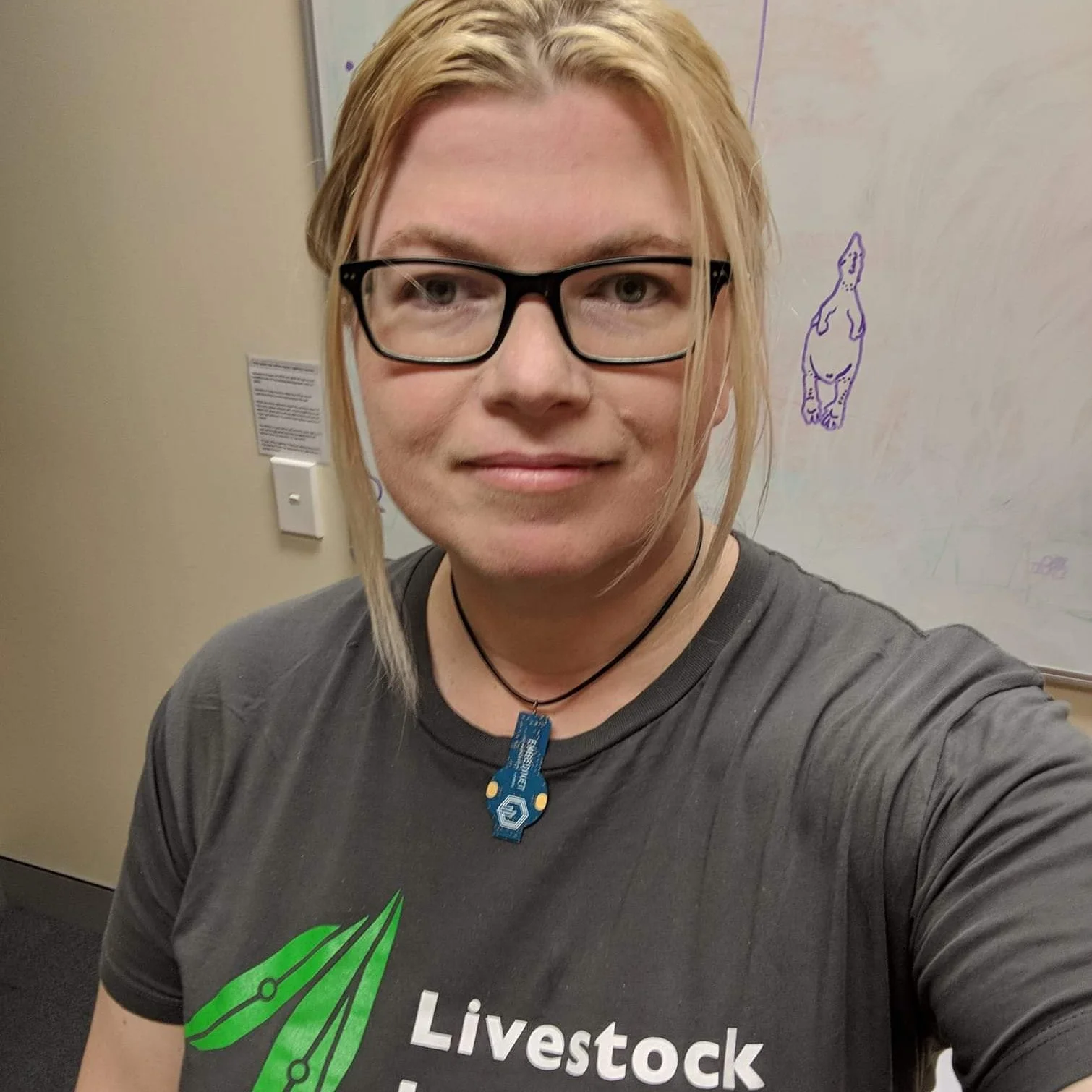
Ep. 36 - Amanda Plimpton on Livestock Labs and the Biohacking Community

In this installment of the Future Grind podcast, host Ryan O’Shea speaks with with Amanda Plimpton, the Chief Operations Officer for Livestock Labs. Livestock Labs is a tech startup that is creating implantable devices to track the health and wellness of cattle. They spun out of the work of Grindhouse Wetware, a collective focused on human enhancement, and they hope to soon return to the human augmentation space. Amanda has previously spoken DEF CON’s Biohacking Village on the topic of Psychoactive Chemicals in Combat, and is well known for her work in the biohacking and human augmentation community.
They discuss the path to market for implantable and augmentative devices, the balance between valuing open source and protecting intellectual property, the growth of the human augmentation community, and more. Say hello to Amanda on Twitter at @cyberlass.
This episode is brought to you by our friends at VivoKey. Unlike other NFC implants, the VivoKey Spark is not a simple NFC chip, it is a secure link to the future. With the Spark, you aren’t just upgrading yourself, you are becoming part of the most advanced cryptobionic community in the world and your new digital capabilities will keep expanding as the VivoKey platform grows. Find out more at vivokey.com, or get the VivoKey spark today at vivokey.com/get-spark!
You can also follow VivoKey on social media -
Twitter: @vivokey
Instagram: Instagram.com/vivokey
Facebook: facebook.com/vivokey
We're posting in two forms, an audio podcast and a video podcast. Please subscribe to our YouTube channel, and iTunes feed as we have some exclusive content that is not posted on both channels. You can also find us on Facebook.
View and share on social media.
Listen to this podcast on iTunes (subscribe, download, review)
Download as an MP3 by right-clicking here and choosing “download as"
Watch this episode on YouTube (subscribe, like, comment)
Show Notes
Amanda’s path to biohacking [2:25]
Where the interest stems from [4:04]
Amanda’s background [4:59]
Grindfest, Biohack.me, & Getting Involved [5:53]
Introducing Livestock Labs [9:51]
Australia & the founding [12:25]
The decision to go for it [14:10]
The Livestock Labs System [15:34]
Current State of Development [16:38]
AI and Machine Learning [17:55]
Commercialization Timeline [18:41]
Fundraising, Investors, & Series A [20:15]
A path to humans [21:30]
Managing a team of biohackers [23:19]
Bringing biohacker tech to market [25:47]
Liabilities, Regulations, & Legalities [27:27]
Open Source, Patents, and Sharing [30:08]
Amanda’s Implants [32:07]
Powered implants & roadblocks to adoption [35:05]
What the community needs to grow [36:29]
How you can get involved [37:54]
Follow along with Amanda & Livestock Labs [39:27]
Mentioned
Rich Lee
Amal Graafstra (Dangerous Things, VivoKey)
Biohack.me
Grindfest
Grindhouse Wetware
Tim Cannon
Cicada Innovations
Cyberise.me
Tritium
BDYHAX
DEF CON Biohacking Village
Please like, comment, rate, and share this podcast to spread the word. Ryan O'Shea is on Instagram, Twitter, and Facebook, and we'd love to hear what you thought and what you want to see going forward.
If you have any questions or are interested in supporting or advertising with Future Grind, you can reach us at hello@futuregrind.org.